The Conference Dinner Problem

A few weeks ago, I arranged to meet an old friend in a pub in central London. We hugged when we saw each other. I ordered a pint each, then we sat down and began to catch up. He was in London to attend an academic conference. As we started on our pints, he told me with great excitement about recent developments in his field.
After we finished our second round, I joined him for dinner with about a dozen other people who were attending the conference. Some of them I had known for years. Others I had never met. We ordered food and began to chat.
After plates were emptied, my friend told me he had been invited to a party. Did I wanted to come along? ‘Sure’, I replied. Looking around the table I realised many of our dining companions were still locked in deep conversation.
‘I think you and I should go to the party now’ I said. ‘The others who are interested can follow along later’. I felt a bit bad suggesting such an individualistic approach. There were people at the dinner I had know for decades. Earlier in the evening, one of our fellow diners had talked about his research on group solidarity. However, I knew from bitter experience that waiting for a large group of loosely connected people to move from one place to another can take forever - if it happens at all.
My friend suggested we try to get a few others to come along to the party. He showed them the address of the party. They countered with another party which was closer. Others continued talking. I paid my share of the bill and gathered my things ready to leave. When I returned, people remained locked in conversation. Soon an old aquantice came over and we started to talk about the state of British higher education. The minutes ticked by as people slowly paid their share of the bill, withdrew their phones and made plans.
Over 30 minutes later we were standing outside the restaurant in a fine London evening rain. ‘Where are you going next’, someone asked. This prompted more comparison of plans, more analysis of logistics, more weighing up of the trade off between partying tonight and presenting tomorrow. People compared their preferences, asked questions and tried to bargain with each other about the best of the different options. Some old hands who had seen this sort of thing before politely bade their farewells and left. I stuck around in the hope of going to a party to spend some more time with my friend.
Another 30 minutes later, a small group of us had finally decided on a destination and we were following Google maps to get there. When we eventually arrived at the party, we were told it was too late. They were out of wine and the venue would close soon. How about the other party, I wondered. ‘Oh, it's getting late’, one of our group responded. They decided to go home to be fresh for tomorrow. Then we stood around and compared options a bit more. By this time my friend and I simply wanted another pint so we headed for the closest pub.
‘You know, we should have just gone to that party when we finished dinner’, my friend said. ‘I know’, I replied. ‘I've experienced this kind of thing before’, I added. ‘It's kind of like one of those rational choice experiments where you struggle to get people to act collectively for their own good’. He laughed. My friend is probably one of the most rational people I know, but I also know he hates rational choice theory. ‘It’s a kind of collective action problem’ I explained, ‘But it’s not the prisoners dilemma where it pays to co-operate. This is almost the opposite - a situation where it doesn't pay to co-operate - at least with too many other people’. I was warming to my idea now. ‘You might call it the conference dinner problem’, I added.
My friend looked at me skeptically, but I felt I had earned the opportunity to expound one of my long held pet theories. ‘You know, every time you go to a conference, you seem to face some version of this situation. You are at a reception with cheap wine. The wine runs out and people are hungry. There are lots of people milling around who want to spend more time together. They want to move on. It is dinner time and they all want to eat. You all have to find somewhere to go. Someone suggests a restaurant to go to next, then there is a lot of deliberation and checking of menus. New people arrive who want to join, other options are suggested, limitations are communicated and preferences shared, logistics are compared, some of the early group members leave, you all start to worry about finding a restaurant which is close and can accommodate lots of people and cater to everyone's dietary preferences. It all takes time. Frustration rises. The impulsive strike out on their own. Eventually people just want to make a decision and get moving, so you all just go to the closest restaurant which offers low quality, high prices and a terrible atmosphere. But at least you are eating’.
By this time, my friend had got through his pint. I could see his eyes had glazed over. ‘Yeah, you are right’ he added, ‘we should have gone to the party when we first discussed it'.
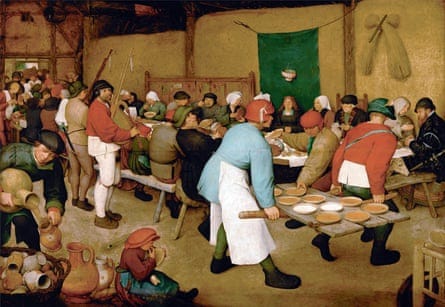
On the way home, I thought about how common this ‘conference dinner problem' is. It isn't just limited to directing people at conferences or co-ordinating dinner plans.
You can find it in product design processes where a group of engineers come together with a vague common goal of redesigning a product. They all have different ideas. Soon more experts are added, other experts leave, side discussions happen. It is difficult to reach an agreement, but eventually everyone gets frustrated. Time is running out so the group just focuses on a substandard design no one is happy with.
You can also find it in policy making when there is a problem and everyone seems to agree that something must be done. A group of experts is assembled to consider the evidence and proposed a solution. They begin their work. New experts arrive and add their perspectives. Then stakeholders are consulted and express their concerns. New preferences and specifications are added. Some experts get annoyed that their vision is getting diluted so they leave to start an alternative policy process. Legislators get involved and add new constraints. A detailed inquiry is launched to pull all the thinking together. Stakeholders start to complain that policy makers are all talk and no action. As frustrations rise, politicians see public interest slipping away so they just make a decision which satisfies no one.
Then there are cases in our day to day lives like selecting a holiday destination. Everyone in the family wants a relaxing break. You discuss what family members might like - a few suggestions are given. The list of ideal features quickly adds up - a beach, good art galleries, nice restaurants, not too hot, easy access, reasonable prices, fun things for kids and so on. After a few days, someone suggests that maybe you could meet up with friends who are also going on holiday at the same time. Another suggests that family members could join the holiday. More research is done to find an apartment which is close to friends that can cater to an every expanding group. Then someone drops out because something else comes up. And so on, until the holiday is rapidly approaching and nothing has been finalized. Eventually someone just finds the first thing which looks vaguely appropriate and books it. It not a great choice but at least it is done.
I'm sure you have also experienced your own version of the conference dinner problem. These are maddening situations where a group of people want to acheive roughly the same thing but they want to do it in different ways. They have some time and resources to do it. The outcome is often significant effort, slow decision making, frustrated people and poor outcomes for everyone. It's a situation where collective action often leads to worse outcomes for everyone rather than better outcomes.
Let's look at each of these features of the conference dinner problem in turn.
The first feature is that there is a group of people who are bound together in some ways by social ties. They want to make a decision together and take collective action which keeps the group together. They might be friends, family members, colleagues or even just members of the same club or association. These ties mean they all have some degree of commitment to one another. They want to not just maximizing the outcome for themselves - they also want to be nice (or appear nice) to others in the group. However, there are often complex networks and subgroups which means that some people are closely connected while other people are not. Person A might really want to dine with person B, and person B might want to dine with person C, but A doesn't necessarily care about C, and they care even less about D who C also invites along.
These complex chains of commitment can make building a group easy but moving it forward hard. This is because if you are person A, you don't just have to convince B, you also have to convince C and D - because if C and D aren't willing to join you, B won't come along.
These kinds of chains of commitment and convincing are typical in business to business sales where the sales person needs to not only satisfy their client, but also their client’s boss as well as their client’s bosses boss, and maybe a few of their boss’s colleagues. Often each of these people care more about maintaining the relationships among themselves than they do about making a decision - let alone making the right decision. They are quite happy to make a poor decision (or even no decision) if it preserves cordial relationships in the group.
The second feature is that this group of people typically have heterogenous preferences. In other words, they all value different things. For instance a group of conference goers looking for a restaurant to dine at are likely to have different preferences. There may be people who want vegetarian options, others who want gluten free options and still others are on a limited budget. There might be people in the group who want to find a place recommended in a guide book they know will have good food. There will be others who are hungry and just want to eat something. Still others will not want to walk too far. All these difference preferences can narrow down choice sets rapidly. Finding a veggie friendly, cheap restaurant with gluten free options which is close by, quick and cheap can be hard and often impossible.
The more different people you add to the mix, the more preferences you are likely to add, and the harder it is likely to be to satisfy everyone. Having large numbers of people with heterogenous preferences is likely to make collective action very difficult. It can easily mean there is no option which will satisfy everyone. If this happens, trade offs will be necessary and barginning will begin. People will start to promote the importance of their interests over others. This can lead to strains in the relationships which bought people together.
The third feature of the conference dinner problem is that the group is held together by social ties which are porous. People can join the group but they can also leave. Think about a product design process. The design team might start out small, but soon new members are added to the group for their expertise. Others in the organisation hear about the process and ask to join. Still others insert themselves into the group. Soon numbers swell and progress slows. The number of preferences expand and the features which need to be included in the product grow exponentially. At this point, some of the original members might get frustrated, express their dissatisfsction, and leave the group. Others might quietly slink away. This can mean preferences and design scope change again. It can mean producing a workable product takes even longer. All these coming and going lead to a changing smorgasbord of preferences but also additional time to build new relationships and negotiate with new comers.
A fourth feature of the conference dinner problem is a partial munificence of time and resources. People are willing to expand the group and engage in some negotiations because they have a bit of time and energy to do so. If they had no time, it's likely they would act more rapidly and look for a single strong direction. If there were more limited resources, people would often go for the first available option which was within their limited means. When people have some time and resources, they are willing to engaging in search and option shoping. Some people in the group might even find this kind of shopping around for options pleasurable. But for other others it is a painful waste of time and energy. One of the benefits of having the time and energy for options shopping is that before you make a decision, everyone is at least potentially satisfied. You are not forced to make an actual trade off where you are forced to sacrifice some features for others. By not making a choice, social ties don't need to be put to the test.
The problem is that resources of time and energy are limited. People will only persist for so long - eventually a decision will need to be made as people run out of patience and time. Often when this happens a decision is made - often fairly randomly. The option which is selected is often the first available one or the easiest. Usually it's not the best choice which satisfies the most people.
A final feature of the conference dinner problem is weak goal homogeneity. Although people have lots of different preferences, most of them ultimately want the same broad thing (or at least say they do). For instance, the conference dinner goers all want to eat. The holiday goers all want to go on holiday. The product design group want to create a new product. What differs of course is the precise nature of the outcome they want to achieve. These difference mean that goal hetrogenity is weak. The fact they all want to achieve the same things binds people together, but the fact they want to acheive it in slight different ways tends to pull people apart.
Putting this all together creates a strange situation where people are bound together by share social ties and a common broad goal, but they are pulled apart by different preferences, shifting alliance and a limited stock of time, energy and resources. The outcome of this strange mixture is often suboptimal decisions, wasted time and frustrated people.
The conference dinner problem doesn't just have similar components, it also has a familiar dynamic.
It starts with a group of people who are connected with each other in some way or another. They want to spend time with each other but they also want to nurture their relationship.
As they spend time together they begin to formulate a common goal - maybe it's going on holiday, building a new product or finding somewhere to have dinner. The goal is often not just a way of satisfying individual needs. It's also a way of acheiving collective needs. But more importantly, the goal is a way of binding the group together.
Once the group has identified a shared goal, they start to express their preferences about how it can be achieved. Group members have lots of ideosynrcatic needs they add into the mix. Some members are articulate and very forcefully about their needs, while others lurk in the background and their preferences remain unsaid but still present. As the goal becomes more well known, more people can join the group and add their own preferences. The list gets longer.
Once a whole jumble of preferences are on the table, the group searches for a solution which will satisfy them. Often the search involves a degree of randomness - people putting forward things that are top of mind or they are familiar or which are close at hand. Also the more people and preferences there are, the fewer the option there will be which accommodate everyone.
Once there are options on the table, people are forced to make a choice. This typically requires trade offs and bargaining. Not everyone's needs can be satisfied. Bargaining can be hard, particularly when people want contradictory things and they are more interested in preserving relationship than acheiving results.
The tensions sparked by trade offs and bargaining often leads some people to defect. They get fed up with all the too-ing and fro-ing and what they see as time wasting. Some feel like their original vision is profoundly compromised. They give up and try to find their own way.
Eventually resources and time begin to run low. People become annoyed. It starts to become obvious that if a decision, any decision, is not made then everyone will give up and no one will achieve anything. When it is obvious that time and resources are running out, the group often simply tries to do something. Often it's the easiest course of action or the first option which is available at time. It is unlikely to be the optimal decision. People are often likely to go along with it because some action is better than no action.
Once a decision is finally made and action is taken, people typically end up releaved yet dissatisfied. They no longer have to bargain but they have to live with a substandard outcome. They may have also lost a few people along the way and destroyed a few relationships as well. But we are human and we want to feel good about the decisions we've been forced to make. To do this we often engage in post decision rationalisation. We convince ourselves the process was worthwhile and the decision we were forced to make wasn't so bad after all. We search for hidden benefits to accentuate which will make us feel good about our predicament. What is objectively a bad choice ends up being rationalised as a good choice. We make the best of what we've got.
When we are trapped in a conference dinner problem, most of us either suffer through it or try to side step out of it. But are there any other ways of solving the problem?
The obvious solution is planning ahead. Instead of going through the process of preference aggregation followed by bargaining and defections and ending with suboptimal outcomes, it is possible to shortcut the process. You simple offer a small set of choices (somewhere between one and three options) which people can opt into or not. Doing this will eliminate all the costly process and add much more certainty about outcomes. It means standardized solutions which might not fit peoples ideosyncratic preferences. Essentially planning ahead trades off certainty against adaptability.
A second potential solution is breaking up the group. Instead of trying to come up with a solution which suits everyone, the large group can break into smaller groups based on smaller set of preferences. Going back to the conference dinner example, the small group of people who value speed might go ahead and find somewhere close and quick. A second group who values quality can find somewhere further away with a well known chef. A third group who wants somewhere cheap could find a place with great value food. The upside is people roughly get what they want. The downside is that by splitting up the group, people don't get the value they might out of large scale collective action. To put this more starkly, instead of having a dinner with a dozen other people you only have a small handful of dining companions.
A third potential solution is that the group appoints a temporary dictator who will make the decision for them. Instead of relying on lots of negotiation and discussion among people, the dictator will hear everyone's needs and then make a decision. The advantage of this solution is speed and clarity, but it is of course open to abuses of power. The temporary dictator might put their preferences first.
A fourth solution is creating clear limitations around time and group membership. You clearly defined who is in the group then give them a defined window of time to make a decision. Ideally you also give them some kind of structured process for making that decision. They need to agree on that process in advance. They also need to agree they will abide by the outcome of the decision process. This should remove uncertainty about group composition and timing. But it is of course open to abuse by the tyranny of the majority.
I’m sure there are other ways of solving the conference dinner problem which can be added to this list.
As I was thinking about this conference dinner problem, I remembered a discussion I had some years ago with a colleague who is an expert in biases and decision making. We were discussing the optimum number of people at a dinner.
I was in favour of a larger group. Maybe six to eight people. That gave you options of who to talk with plus more perspectives around the table. More people meant more conversations. My colleague was totally against my proposition. According to my colleague, the optimum number of people for dinner was four people. That meant one conservation, everyone had some air time, and relatively easy planning. Besides it was much easier to find a table for four than finding a table for six or eight. She pointed out the larger the group was, the more likely you are to get trapped just talking with one or two others.
My colleague had a point. Smaller groups are often much better at getting things done. In smaller groups people can build closer relationships. It's easier to find a table for a few rather than cater to the needs of the many. But I still like the excitement of a table full of different people.